
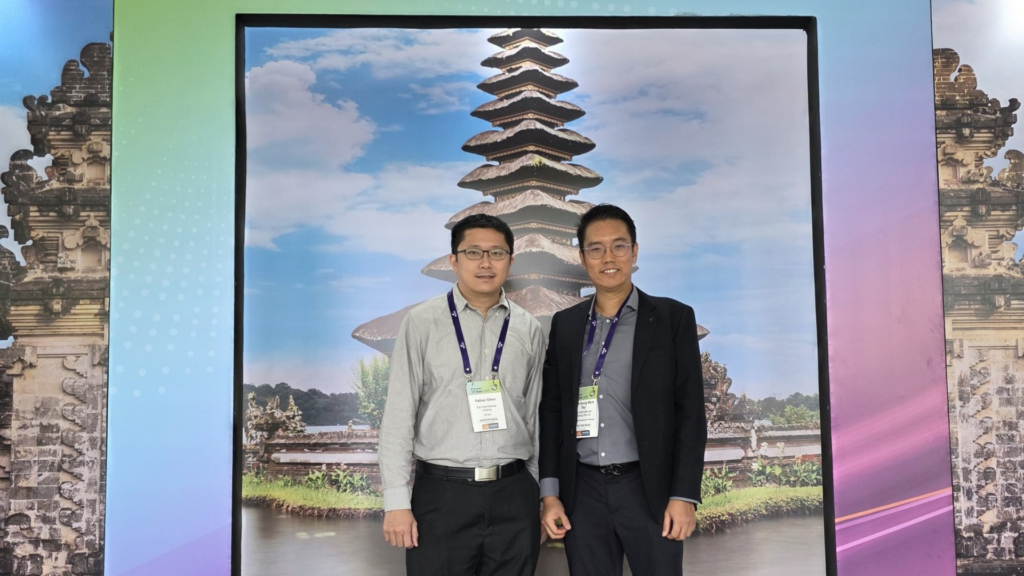
Bali Coaltrans 2026 – another year at Asia-Pacific’s biggest coal and energy trade gathering, and another chance to take the pulse of where the market is headed.
Since 2018, our participation in this gathering has given us a close read on the regulatory and commercial currents shaping the industry. Our team this year, represented by Mars Tay and Fabian Chen, took in discussions centred on RKAB, DMO, supply availability, and the rollout of DSI – and what each of these mean in practice for producers, traders and end-users.
The backdrop to these discussions is a market under real pressure. Indonesia exported roughly 524 million tonnes of thermal coal in 2025 – more than half of all seaborne thermal coal traded globally – which makes its domestic policy choices a de facto supply lever for the whole region.
RKAB, the annual production work plan and budget system, was reverted from a three-year to a one-year approval cycle in 2025. The resulting approval delays have reportedly left vessels waiting at port for weeks at a time, and market estimates suggest 2026 quota reductions could remove as much as 100 million tonnes from output relative to unconstrained capacity.
DSI – the newly announced framework for routing coal exports, alongside palm oil and ferroalloys, through a centralised state entity – is generating the most active discussion. It’s structured as a three-phase rollout: electronic reporting from June 2026, a transition period through the rest of the year, and full state control of export contracts from January 2027. For traders and financiers, the open questions are mostly around how existing offtake financing arrangements and contracts would be treated once that transition completes.
The framework is still working through its phased rollout, and like the rest of the industry, we’ll be watching closely to see how it develops in practice.